Saturday, October 17, 2020

Naomi Klein: Disaster Capitalism and COVID-19

 The coronavirus is officially a global pandemic that has so far infected 10 times more people than SARS did. Schools, university systems, museums, and theaters across the U.S. are shutting down, and soon, entire cities may be too. Experts warn that some people who suspect they may be sick with the virus, also known as COVID-19, are going about their daily routines, either because their jobs do not provide paid time off because of systemic failures in our privatized health care system


  • These are the perfect conditions for governments and the global elite to implement political agendas that would otherwise be met with great opposition if we weren’t all so disoriented. This chain of events isn’t unique to the crisis sparked by the coronavirus; it’s the blueprint politicians and governments have been following for decades known as the “shock doctrine,” a term coined by activist and author Naomi Klein in a 2007 book of the same name.
  • History is a chronicle of “shocks”—the shocks of wars, natural disasters, and economic crises—and their aftermath. This aftermath is characterized by disaster capitalism,” calculated, free-market “solutions” to crises that exploit and exacerbate existing inequalities.
  • Klein says we’re already seeing disaster capitalism play out on the national stage: In response to the coronavirus, Trump has proposed a $700 billion stimulus package that would include cuts to payroll taxes (which would devastate Social Security) and provide assistance to industries that will lose business as a result of the pandemic.
  • “They’re not doing this because they think it’s the most effective way to alleviate suffering during a pandemic—they have these ideas lying around that they now see an opportunity to implement,” 
Let’s start with the basics. What is disaster capitalism? What is its relationship to the “shock doctrine”?
  • disaster capitalism is really straightforward: It describes the way private industries spring up to directly profit from large-scale crises. 
    • Disaster profiteering and war profiteering isn’t a new concept, but it really deepened under the Bush administration after 9/11, when the administration declared this sort of never-ending security crisis, and simultaneously privatized it and outsourced it—this included the domestic, privatized security state, as well as the [privatized] invasion and occupation of Iraq and Afghanistan.
  • The “shock doctrine” is the political strategy of using large-scale crises to push through policies that systematically deepen inequality, enrich elites, and undercut everyone else. In moments of crisis, people tend to focus on the daily emergencies of surviving that crisis, whatever it is, and tend to put too much trust in those in power. We take our eyes off the ball a little bit in moments of crisis.

Where does that political strategy come from? How do you trace its history in American politics?
  • The shock-doctrine strategy was as a response to the original New Deal under FDR. [Economist] Milton Friedman believes everything went wrong in America under the New Deal: As a response to the Great Depression and the Dust Bowl, a much more activist government emerged in the country, which made it its mission to directly solve the economic crisis of the day by creating government employment and offering direct relief.
  • If you’re a hard-core free-market economist, you understand that when markets fail it lends itself to progressive change much more organically than it does the kind of deregulatory policies that favor large corporations. So the shock doctrine was developed as a way to prevent crises from giving way to organic moments where progressive policies emerge. 
    • Political and economic elites understand that moments of crisis is their chance to push through their wish list of unpopular policies that further polarize wealth in this country and around the world.

Right now we have multiple crises happening: a pandemic, a lack of infrastructure to manage it, and the crashing stock market. Can you outline how each of these components fit into the schema you outline in The Shock Doctrine ?
  • The shock really is the virus itself. And it has been managed in a way that is maximizing confusion and minimizing protection. I don’t think that’s a conspiracy, that’s just the way the U.S. government and Trump have utterly mismanaged this crisis. 
    • Trump has so far treated this not as a public health crisis but as a crisis of perception, and a potential problem for his reelection.
  • It’s the worst-case scenario, especially combined with the fact that the U.S. doesn’t have a national health care program and its protections for workers are abysmal. This combination of forces has delivered a maximum shock. 
    • It’s going to be exploited to bail out industries that are at the heart of most extreme crises that we face, like the climate crisis: the airline industry, the gas and oil industry, the cruise industry—they want to prop all of this up.

HOW HAVE WE SEEN THIS PLAY OUT BEFORE?
  • This happened after Hurricane Katrina. Washington think tanks like the Heritage Foundation met and came up with a wish list of “pro-free market” solutions to Katrina. 
  • We can be sure that exactly the same kinds of meetings will happen now— in fact, the person who chaired the Katrina group was Mike Pence. 
    • In 2008, you saw this play out in the original [bank] bail out, where countries wrote these blank checks to banks, which eventually added up to many trillions of dollars. 
    • But the real cost of that came in the form of economic austerity [later cuts to social services]. So it’s not just about what’s going on right now, but how they’re going to pay for it down the road when the bill for all of this comes due.

Is there anything people can do to mitigate the harm of disaster capitalism we’re already seeing in the response to the coronavirus? Are we in a better or worse position than we were during Hurricane Katrina or the last global recession?
  • When we’re tested by crisis we either regress and fall apart, or we grow up, and find reserves of strengths and compassion we didn’t know we were capable of. This will be one of those tests. 
    • unlike in 2008—we have such an actual political alternative that is proposing a different kind of response to the crisis that gets at the root causes behind our vulnerability, and a larger political movement that supports it.
  • This is what all of the work around the Green New Deal has been about: preparing for a moment like this. We just can’t lose our courage; we have to fight harder than ever before for universal health care, universal child care, paid sick leave—it’s all intimately connected.

If our governments and the global elite are going to exploit this crisis for their own ends, what can people do to take care of each other?
  • ”'I’ll take care of me and my own, we can get the best insurance there is, and if you don't have good insurance it's probably your fault, that's not my problem”: 
    • This is what this sort of winners-take-all economy does to our brains. What a moment of crisis like this unveils is our porousness to one another. 
    • We’re seeing in real time that we are so much more interconnected to one another than our quite brutal economic system would have us believe.
  • We might think we’ll be safe if we have good health care, but if the person making our food, or delivering our food, or packing our boxes doesn’t have health care and can’t afford to get tested—let alone stay home from work because they don’t have paid sick leave—we won’t be safe. 
    • If we don’t take care of each other, none of us is cared for. We are enmeshed.
  • Different ways of organizing society light up different parts of ourselves. If you’re in a system you know isn’t taking care of people and isn’t distributing resources in an equitable way, then the hoarding part of you is going to be lit up. 
    • So be aware of that and think about how, instead of hoarding and thinking about how you can take care of yourself and your family, you can pivot to sharing with your neighbors and checking in on the people who are most vulnerable.
LESSONS FROM KATRINA (in New Orleans)

The Politics of Pandemics

 We can choose to walk through it, dragging the carcasses of our prejudice and hatred, our avarice, our data banks and dead ideas . . . Or we can walk through lightly, with little luggage, ready to imagine another world. And ready to fight for it." --Arundhati Roy, “The Pandemic is a Portal”:


How Does COVID 19 Reveal Political Realities?

  • Narratives from the 1918 Influenza Pandemic
    • Little data collected-disadvantage
    • Rates of Morbidity for Blacks lower and mortality higher
      • May have caught first wave in Spring and Summer and been immune to deadlier second wave in Winter
      • Structural violence and crowded living conditions led to greater susceptibility to first wave
    • Racist Discourses-1918 (and today?)
      • Negroes are biologically immune (not human like us-if they dont get it)
      • Negroes are inferior (if they die)
      • Negroes are virus vectors but dont get the illness
      • Black medical schools and institutions founded in the 1880s were regulated through policies in 1910
      • Black nurses could not join the war effort in WWI
      • During the pandemic they treated white patients, not black
    • Counter Narratives- Black Voices
      • Created their own medical responses within their communities
      • created their own counter-narratives which directed Blacks to take precautions and debunked racist narratives
  • Exacerbating factors
    • great migration and ghettoizing in crowded northern cities
    • Jim Crow Laws

COVID-19 Comparison

  • affecting Black, Hispanic and Native American populations in similar ways due to structural violence
  • As a result of continued redlining, minority residential environments bear substantial barriers to health optimization, such as reduced green space access, disproportionate tobacco and alcohol marketing, low perceived neighborhood safety, and food deserts MAPS
  • Similar racist narratives being put forth
    • poor hygiene
    • greater immunity (physical superiority/mental inferiority)
    • vectors for disease (people or communities of color)
  • narratives of personal responsibility as a key driver of health outcomes 
    • These accounts place the burden of differential outcomes on minorities rather than acknowledging the lasting legacy of structural racism. 
    • They also detach minority health from that of the majority rather than viewing it as part of the nation's collective mission.
  • Challenges
    • long-term COVID-19 sequelae (pathological conditions resulting from a disease)
    • pre-existing conditions in minority communities
    • exacerbation of underlying chronic conditions, 
    • mistrust in the health care system
    • misinformation in poor communities
  • Responses
    •  1) examine the historical arc contextualizing current disparities in vulnerable communities; 
    • 2) recognize the inherent strengths in these communities, empowering them to participate in research and generate solutions alongside those who traditionally hold power; 
    • 3) acknowledge the contributions of frontline workers in communities of color; 
    • 4) prepare for future public health emergencies by enhancing minority civic participation; and 
    • 5) use a restorative justice framework to acknowledge and make amends for the structures contributing to disadvantages in these communities 

Tuesday, October 13, 2020

 William Barr on COVID-19 and BLM


Race Matters: BLM and COVID-19 Pandemic

 Black Lives Matter movement finds new urgency and allies because of COVID-19


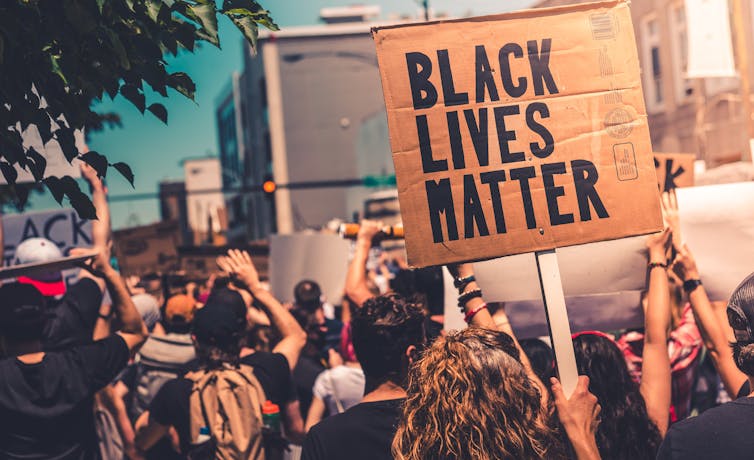
The brutal killing of George Floyd by Minneapolis Police Department officer Derek Chauvin captured the public consciousness unlike few other events in American history. In the U.S. and around the world, protesters have taken to the streets outraged by the abhorrent killing of yet another defenceless Black man by police.

  • The question, however, is how this particular incident has galvanized so many people worldwide — overwhelmingly young — to protest for so long?
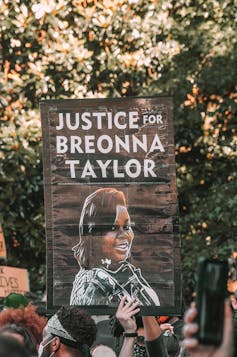
    • Certainly, police brutality directed toward Black people in the U.S. is not new. The chant and hashtag "SAY THEIR NAMES" brings attention to the brutal killings of Breonna Taylor, Ahmaud Arbery, Eric Garner, Trayvon Martin, Michael Brown and many others, along with George Floyd.
    • ALL LIVES MATTER  in Canada, Black and Indigenous people have experienced significant brutality at the hands of the police. In recent weeks, the public has seen news of the deaths of Regis Korchinski-Paquet and Chantel Moore, and the arrest of Athabasca Chipewyan First Nation Chief Allan Adam.
  • Economic and political disadvantages experienced in the U.S. and Canada are not new. Economic disparities between black and white have been obvious for years.

  • As in many previous cases, the killing of George Floyd was caught on camera. The recording was striking, producing a visceral impression of a public lynching, but it was not unlike the recordings of Rodney King, Alton Sterling and others in sparking public outcry.

The difference this time around is the contemporaneous outbreak of the COVID-19 pandemic, which has contributed to making these protests more enduring and widespread. 

  • COVID-19 has exacerbated the problems of racial injustice, isolation, frustration and stagnation and caused higher unemployment, which provides the time to air these grievances. 
  • When coupled with mixed messages from elites, the spark lit a fire that continues to burn.

Mixed messages

Right from the beginning, government officials gave contradictory messages. 

  • President Donald Trump told the public on Jan. 22 that the virus was "TOTALLY UNDER CONTROL" and that he was "NOT AT ALL" worried about it. 
  • A month later, on Feb. 26, he repeated this. 
  • By March 15, Trump changed his tune, admitting that the virus was indeed "CONTAGIOUS AND NOT UNDER CONTROL" 
  • Still, he concluded on March 25 that all would be back to work as usual in "SEVERAL WEEKS" 
  • In contrast, governors across the country were declaring states of emergency.

The flip flop regarding the pandemic resulted in MIXED MESSAGES and demonstrated a division among the elites. 

  • When political leaders are divided or provide mixed messages, the public has a variety of authorities to choose from and may ignore whatever semblance of rules are in place. 
  • From this, a state of anomie or "normlessness" can emerge.

Increase in unemployment

COVID-19 policies and government directives have resulted in economic downturn. 

  • By May, 20.5 million Americans were unemployed, an increase of 14 million from February. 
  • Although the unemployment rate increased for all groups, it was the highest among Black Americans and other racialized groups.
    • Unemployment rates for Black men and women in May were 15.8 per cent and 17.2 per cent, respectively, while the national rate of unemployment for all groups was 13 per cent. 
    • The rate was even higher among people aged 16 to 24, standing at 25.3 per cent in May.

  • Unemployed Black people in Canada and the U.S. also faced greater financial challenges to supporting their families due to the pandemic than their white counterparts.
  • COVID-19 has amplified the ordinary inequality in unemployment, which increases dissatisfaction and inclination towards speaking out.

Frustration and anxiety

By the end of June, more than 10 million people had contracted COVID-19 worldwide and over 500,000 had died. 

  • The uncertainty, unemployment and confused government directives on business lockdowns and social distancing increased stress and anxiety.
    • For some, social distancing felt like house arrest. 
    • Frustrations were enhanced by uncertainty due to misinformation. 
    • The extent of misinformation was such that some started to believe conspiracies. 
    • In addition, the frustration of Black Americans was further increased because they were disproportionately affected by COVID-19 and receive poor healthcare and treatment.

  • Government advice to shelter at home further increased frustrations and exposed economic inequalities. 
    • Black Americans, who are on average significantly less well off than their white counterparts, are more likely to:
      •  live in crowded housing, 
      • work in essential services, 
      • have prior health conditions that increase mortality rates 
      • rely on public transport. 
    • COVID-19 increased levels of frustration among the public in general, but Black Americans and other minorities have been hit hardest.
In such circumstances, people tend to live in a state of endless suspense, fearful about their health, uncertain of the truth, unable to know when it will end. These can all be drivers toward tangible action to affect change.

Anonymity and extra time

COVID-19 also has a curious effect in enabling protests. 

  • Even as health concerns over protests rose, many protesters attended with face masks, providing additional protection from recognition and prosecution. 
  • The existence of CCTV cameras is a deterrence against protests, but masks offer some anonymity that may prevent legal consequences or illegal retribution. 
  • The pandemic helped increase participation of those who wished to be involved, but feared surveillance apparatuses.


  • But perhaps the greatest factor that allows participation of those grievances is time
    • When people have discretionary time, they are more likely to participate in social movements to effect change. 
    • Prior to COVID-19, the cycle of work and life limited extra time for taking to the streets to demonstrate for a cause, particularly when a choice had to be made between protesting for a better tomorrow and earning a paycheck.
      • COVID-19 removed the need to make that decision. 

All countries experienced increased unemployment, some form of social distancing and lockdown. 

The consequent extra time provided opportunities for people to join the demonstrations en masse, ensuring that the spark which ignited the protest could last for a long time and grow worldwide.

Intensifying inequalities elevated dissatisfaction while grievances in the U.S. and elsewhere and the video of George Floyd’s death, reminiscent of a public lynching, provided the spark. 

However, what may have helped make the movement larger, enduring and international in scope were the lockdowns and the mass unemployment that came with them. 

And although the media has begun to pay less attention, the protesters continue to have the time and motivation to keep the flame burning.

Monday, October 12, 2020

Infectious Inequalities


·         renowned global health advocate,
·         medical anthropologist,
·         cofounder of Partners In Health, and
·         chair of the Department of Global Health and Social Medicine at Harvard     Medical School.
·        U.N. Special Adviser to the Secretary-General on Community-based Medicine and Lessons from Haiti.

The most publicly influential anthropologist since Margaret Mead and her mentor, the “founding father” of U.S. anthropology, Franz Boas. 
·         Seeing the world from the perspective of the planet’s poorest. Unlike many doctors (and anthropologists for that matter), Farmer has lived for decades with his patients, first in Haiti and later in communities from Rwanda to impoverished neighborhoods in Boston.
o   “It took me a relatively short time in Haiti,” Farmer writes of the beginnings of his career in his 2003 book Pathologies of Power, “to discover that I could never serve as a dispassionate reporter or chronicler of misery. I am only on the side of the destitute sick and have never sought to represent myself as some sort of neutral party.” 

·         Farmer’s work is unflinchingly committed to social justice, global equity, and the idea that health care is a human right, beginning with what he calls “the most basic right . . . to survive.” Like his medicine, Farmer’s anthropology is thus an anthropology in service to the poor.
o   Importantly, this does not mean an anthropology of the poor. Farmer is well aware that “writing of the plight of the oppressed is not a particularly effective way of assisting them.” After all, anything one might say is likely to be used against them. 
o   Instead, Farmer is interested in studying and exposing the “processes and forces that conspire” to constrain the agency of the poor and that cause poverty, disease, and suffering.  

·      Interest in the root causes of poverty and the diseases has led to his analysis of structural violence.”
o   Drawing on the work of Norwegian sociologist Johan Galtung, Farmer calls attention to powerful forms of everyday violence, like poverty, hunger, and poor health, that can be just as deadly as the violence of bullets and war but that tends to be caused by social forces, political and economic institutions, and the decisions of policymakers.
§  The root causes of a Haitian contracting HIV/AIDS are to be found not in personal irresponsibility but in the displacement of a village by a dam planned and funded by powerful actors in Washington, D.C.; by the impoverishment the dam created; and by the long-term impoverishment of Haiti through centuries of subjugation at the hands of the United States and European powers dating to the days of slavery.  

·       Farmer’s is a bio-sociocultural-political-economic-historical anthropology.  
o   His work as both an anthropologist and a physician revolves around the lives of individuals suffering amid powerful structural forces. He combines an empathetic understanding of people’s lived experience and how people make meaning in their lives with a political, economic, and historical analysis of the large-scale forces that shape individual lives. Coupled with an appreciation for the biological vectors of disease causation.

·     His tireless commitment to creating positive social change and to using his anthropological and medical skills to help improve the lives of the poor.
o   (When told he should spend more time with his wife and child in Paris, Farmer responded, “But I don’t have any patients there.”)

·         Community based and sustainable health care development.
o   Farmer and Partners In Health, emphasize working in solidarity with those they serve; training Haitians and others to become doctors, nurses, and community health care workers; and building sustainable health care infrastructures designed to be part of public health care systems. 
o   Haitian counterpart organization Zanmi Lasante
§  IMPACT (according to Kidder in Haiti)
·         Zanmi Lasante had built schools and houses and communal sanitation and water systems throughout its catchment area [in central Haiti].
·         Vaccinated all the children
·         Greatly reduced both local malnutrition and infant mortality.
·         launched programs for women’s literacy and for the prevention of AIDS
·         Reduced the rate of HIV transmission from mothers to babies to 4 percent—about half the current rate in the United States.
·         When Haiti had suffered an outbreak of typhoid resistant to the drugs usually used to treat it, Zanmi Lasante had imported an effective but expensive antibiotic, cleaned up the local water supplies, and stopped the outbreak throughout the central plateau.
·         In Haiti, tuberculosis still killed more adults than any other disease, but no one in Zanmi Lasante’s catchment area had died from it since 1988.

·         Partners in Health (PIH) has accomplished far more since its inception.
o   serves some 2.4 million people in 12 countries, in settings that include post-genocide Rwanda, Peruvian slums, and Russia’s prisons.
o   In devastated post-earthquake Haiti, PIH recently inaugurated a 300-bed, state-of-the-art, solar-powered university teaching hospital that represents the country’s largest post-earthquake reconstruction project.  

·         PIH and Farmer reject conventional public health wisdom about what’s “possible” in the provision of health care in impoverished settings.
o   They reject arguments that treatments available in wealthy countries like the United States aren’t “cost effective” in settings like Haiti.
o   Guided by the radical idea that all human lives are equal, that PIH should provide the same quality of care to the poor that the wealthy want for their own family members, that health care is a human right, PIH and Farmer demand nothing less than a “preferential option for the poor.” 

“That goal is nothing less than the refashioning of our world into one in which no one starves, drinks impure water, lives in fear of the powerful and violent, or dies ill and unattended,” Farmer says in a National Public Radio “This I Believe” essay. 
“Of course such a world is a utopia,” Farmer continues, “and most of us know that we live in a dystopia. But all of us carry somewhere within us the belief that moving away from dystopia moves us towards something better and more humane. I still believe this.” 

Emerging Infectious Diseases and the Impact of Inequality


Ebola, TB, and HIV infection are in no way unique in demanding contextualization through social science approaches. These approaches include the grounding of case histories and local epidemics in the larger biosocial systems in which they take shape and demand exploration of social inequalities

  • Responsible factors include ecological changes, such as those due to agricultural or economic development or to anomalies in the climate; human demographic changes and behavior; travel and commerce; technology and industry; microbial adaptation and change; and breakdown of public health measures
  • human actions have played a large role in enhancing pathogenicity or increasing resistance to antimicrobial agents-the sociogenesis, or anthropogenesis of emerging infections
  • Malaria's decline in this country was "due only in small part to measures aimed directly against it, but more to agricultural development and other factors some of which are still not clear" 
    • These factors include poverty and social inequalities, which led, increasingly, to differential morbidity with the development of improved housing, land drainage, mosquito repellents, nets, and electric fans—all well beyond the reach of those most at risk for malaria. In fact, many "tropical" diseases predominantly affect the poor; the groups at risk for these diseases are often bounded more by socioeconomic status than by latitude.
  • The model of health transitions suggests that nation-states, as they develop, go through predictable epidemiologic transformations. Death due to infectious causes is supplanted by death due to malignancies and to complications of coronary artery disease, which occur at a more advanced age, reflecting progress.
    • the concept of national health transitions also masks other realities, including intranational illness and death differentials that are more tightly linked to local inequalities than to nationality.
    • In Harlem the death rate due to infectious disease and violence is higher than in Bangladesh
  • the health of the individual is best ensured by maintaining or improving the health of the entire community
    • But what is Community? The dynamics of emerging infections will not be captured in national analyses any more than the diseases are contained by national boundaries, which are themselves emerging entities—most of the world's nations are, after all, 20th-century creations.
New Questions for the Modern Transnational Reality: 
  • What are the mechanisms by which changes in agriculture have led to outbreaks of Argentine and Bolivian hemorrhagic fever, and how might these mechanisms be related to international trade agreements, such as the General Agreement on Tariffs and Trade and the North American Free Trade Agreement? 
  • How might institutional racism be related to urban crime and the outbreaks of multidrug-resistant TB in New York prisons? 
  • Does the privatization of health services buttress social inequalities, increasing risk for certain infections—and death—among the poor of sub-Saharan Africa and Latin America? 
  • How do the colonial histories of Belgium and Germany and the neocolonial histories of France and the United States tie in to genocide and a subsequent epidemic of cholera among Rwandan refugees? 
  • Similar questions may be productively posed in regard to many diseases now held to be emerging.

CASES: Ebola, TB, HIV, COVID

EBOLA

The Institute of Medicine lists a single "factor facilitating emergence" for filoviruses: "virus-infected monkeys shipped from developing countries via air"...but:
  • the distribution of Ebola outbreaks is tied to regional trade networks and other evolving social systems. 
  • impacts people living in poverty, and health care workers who serve the poor, but not others in close physical proximity
  • Most expert observers thought that the cases could be traced to failure to follow contact precautions, as well as to improper sterilization of syringes and other paraphernalia, measures that in fact, once taken, terminated the outbreak
  • In Zaire, one's likelihood of coming into contact with unsterile syringes is inversely proportional to one's social status. Local élites and sectors of the expatriate community with access to high-quality biomedical services (viz., the European and American communities and not the Rwandan refugees) are unlikely to contract such a disease.
  • The changes involved in the disease's visibility are equally embedded in social context. The emergence of Ebola has also been a question of our consciousness. -- print and broadcast media, have been crucial in the construction of Ebola—a minor player, statistically speaking, in Zaire's long list of fatal infections—as an emerging infectious disease

TB

Its recrudescence is often attributed to the advent of HIV—the Institute of Medicine lists "an increase in immunosuppressed populations" as the sole factor facilitating the resurgence of TB, and drug resistance. 
  • the most important contributor to this state of ignorance was the greatly reduced clinical and epidemiologic importance of tuberculosis in the wealthy nations"
  • TB has not really emerged so much as emerged from the ranks of the poor --one place for diseases to hide is among poor people, especially when the poor are socially and medically segregated from those whose deaths might be considered more important.
  • when poor people immigrate into the United States, an increase in TB incidence is inevitable. In a recent study of the disease among foreign-born persons in the United States, immigration is essentially credited with the increased incidence of TB-related disease 
  • many persons with TB in the United States live in homeless shelters, correctional facilities, and camps for migrant workers.
  • But there is no discussion of poverty or inequality, even though these are, along with war, leading reasons for both the high rates of TB and for immigration to the United States. 

HIV

Suspicion: an epidemic Haitian virus that was brought back to the homosexual population in the United States" 
  • This proved incorrect, but not before damage to Haitian tourism had been done. Result: more poverty, a yet steeper slope of inequality and vulnerability to disease, including AIDS. 
  • The label "AIDS vector" was also damaging to the million or so Haitians living elsewhere in the Americas and certainly hampered public health efforts among them 
  • as regards Haiti and AIDS, these mechanisms of propagation included  --"exoticization" of Haiti, racism, the existence of influential folk models about Haitians and Africans, and the conflation of poverty and cultural difference.
  • Critical reexamination of the Caribbean AIDS pandemic showed that the distribution of HIV does not follow national borders, but rather the contours of a transnational socioeconomic order. 
    • much of the spread of HIV in the 1970s and 1980s moved along international "fault lines," tracking along steep gradients of inequality, which are also paths of migrant labor and sexual commerce
  • Like TB, HIV infection is entrenching itself in the ranks of the poor or otherwise disempowered. 
    • Rise in women of color: The means by which confluent social forces, such as gender inequality and poverty, come to be embodied as risk for infection with this emerging pathogen have been neglected in biomedical, epidemiologic, and even social science studies on AIDS.
Standard epidemiology, narrowly focused on individual risk and short on critical theory, will not reveal these deep socioeconomic transformations, nor will it connect them to disease emergence. 
  • "Modern epidemiology," observes one of its leading contributors, is "oriented to explaining and quantifying the bobbing of corks on the surface waters, while largely disregarding the stronger undercurrents that determine where, on average, the cluster of corks ends up along the shoreline of risk"
  • Neither will standard journalistic approaches add much: "Amidst a flood of information," notes the chief journalistic chronicler of disease emergence, "analysis and context are evaporating . . . Outbreaks of flesh eating bacteria may command headlines, but local failures to fully vaccinate preschool children garner little attention unless there is an epidemic".
SOCIAL INEQUALITY (questions)
What are the precise mechanisms by which these diseases come to have their effects in some bodies but not in others?
  • dearth of attention to the effects of sexism and class differences; studies that examine the conjoint influence of these social forces are virtually nonexistent
TRANSNATIONAL FORCES (questions)
How are diseases spread between populations and can they be understood within national boundaries?
What effects might the interface between two very different types of health care systems have on the rate of advance of an emerging disease? 
What turbulence is introduced when the border in question is between a rich and a poor nation? 
  • Almost all diseases held to be emerging—from the increasing number of drug-resistant diseases to the great pandemics of HIV infection and cholera—stand as modern rebukes to the parochialism of this and other public health constructs
  • Many political borders serve as semipermeable membranes, often quite open to diseases and yet closed to the free movement of cures. Thus may inequalities of access be created or buttressed at borders, even when pathogens cannot be so contained.
  • Mexico/USA border: Among the infectious diseases registered at this border are: multi-drug-resistant TB, rabies, dengue, and sexually transmitted diseases including HIV infection (said to be due, in part, to "cross-border use of `red-light' districts").
"Risk Groups" versus "Those at Risk" (does it matter?)
  • affect-laden issues—attribution of blame to perceived vectors of infection, identification of scapegoats and victims, the role of stigma—are rarely discussed in academic medicine, although they are manifestly part and parcel of many epidemics.
What and Who Get Funding (and Get Noticed)?
  • questions of power and control over funds, must be discussed -- That they are not is more a marker of analytic failures than of editorial standards.
  • "Diseases that appear not to threaten the United States directly rarely elicit the political support necessary to maintain control efforts"
"The conquest of infectious diseases" (who are we kidding?) 
  • the historical regard has shown us that what was not examined during an epidemic is often as important as what was and that social inequalities were important in the contours of past disease emergence. 
  • "The key task for medicine," argued the pioneers Eisenberg and Kleinman, "is not to diminish the role of the biomedical sciences in the theory and practice of medicine but to supplement them with an equal application of the social sciences in order to provide both a more comprehensive understanding of disease and better care of the patient. The problem is not `too much science,' but too narrow a view of the sciences relevant to medicine"

Arthur Klienman's Nine Questions

 Models for Promoting Culturally Competent Patient-Provider Communication: Kleinman's Nine Questions


The questions are: 

  • What do you call your problem? 
  • What name does it have? 
  • What do you think caused your problem?
  •  Why do you think it started when it did? 
  • What does your sickness do to you? 
  • How does it work? How severe is it? 
  • Will it have a short or long course? 
  • What do you fear most about your disorder? 
  • What are the chief problems that your sickness has caused for you? 
  • What kind of treatment do you think you should receive? 
  • What are the most important results you hope to receive from the treatment? 

QANON, Distrust of Biomedicine and Vaccine Conspiracies

  Distrust of vaccines may be almost as contagious as measles , More than 100 people have been infected with measles this year. Over 50 of t...